Marketing Insights · 12 Sep 2026 · 2 min read
Brand Strategy vs. Brand Design: Why You Need Both
A logo is not a brand strategy, and a positioning document is not a design system. Confusing the two is one of the most common — and costly — mistakes growing companies make.
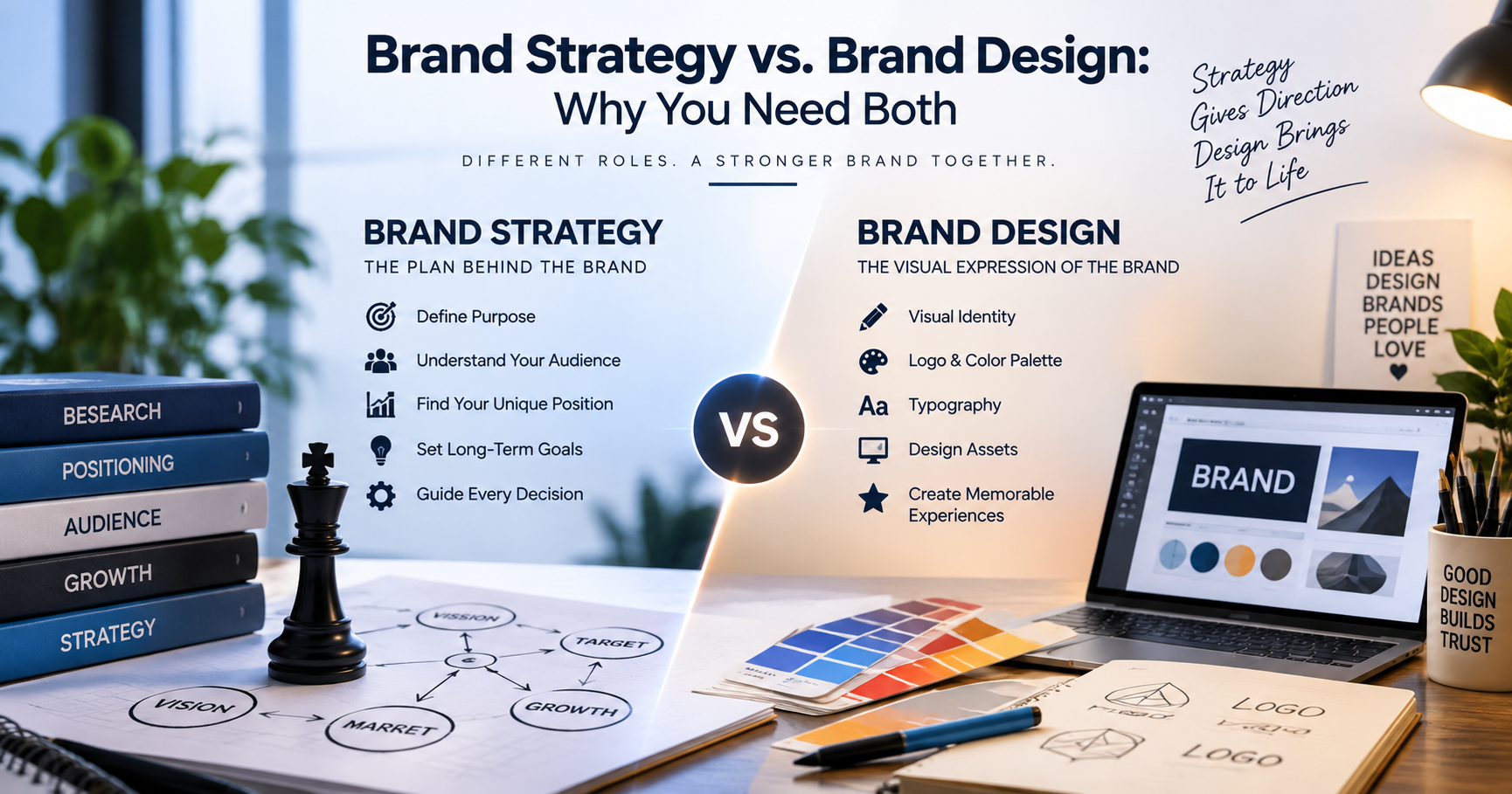
"We need a rebrand" usually means one of two very different things, and most companies don't realize it until halfway through the project. One version is a design problem: the current look feels dated, inconsistent, or doesn't match the quality of the product. The other is a strategy problem: the market doesn't understand what the company does, or why it should be chosen over a competitor.
Brand strategy comes first
Strategy answers questions that have nothing to do with color palettes: who exactly is the buyer, what do they actually care about, what does the company do better than anyone else in the category, and what should never be said in marketing because it doesn't hold up. Skipping this step and jumping straight to a new logo produces something that looks better but still fails to explain why anyone should care.
Brand design makes the strategy visible
Once positioning is settled, design translates it into something consistent and repeatable — a naming system, a visual identity, and the rules that keep every touchpoint (the website, the pitch deck, the trade show booth, the email footer) recognizably the same brand, without a designer manually rebuilding every asset from scratch.
Why splitting the two across vendors backfires
When positioning is written by one team and handed to a separate design studio with no context, the resulting identity often looks good but says nothing specific — because the designer was never given anything specific to say. The strongest brand work happens when the same team carries the positioning all the way through to the pixels, so the story and the look stay locked together instead of drifting apart.